Turn a watering day into a checking day
A calendar reminder is useful for bringing plants to your attention. It is less useful as an instruction to give every pot water. A fern near a heater, a ZZ plant in a cool corner, and an orchid in coarse bark do not use water at the same rate. Even two identical pots can behave differently when one receives more light. A dependable routine begins by checking the root environment and then choosing whether to water.
Think of watering as restoring moisture after the plant has used an appropriate amount, while preserving the air roots need. Overwatering is not simply the size of one drink. A thorough watering followed by drainage can be appropriate, while repeated small additions to an already wet mixture can be damaging. The essential relationship is between moisture, oxygen, root activity, and the interval before the next drink. Learning that relationship is more useful than memorizing a universal number of days.
Identify the growing medium first
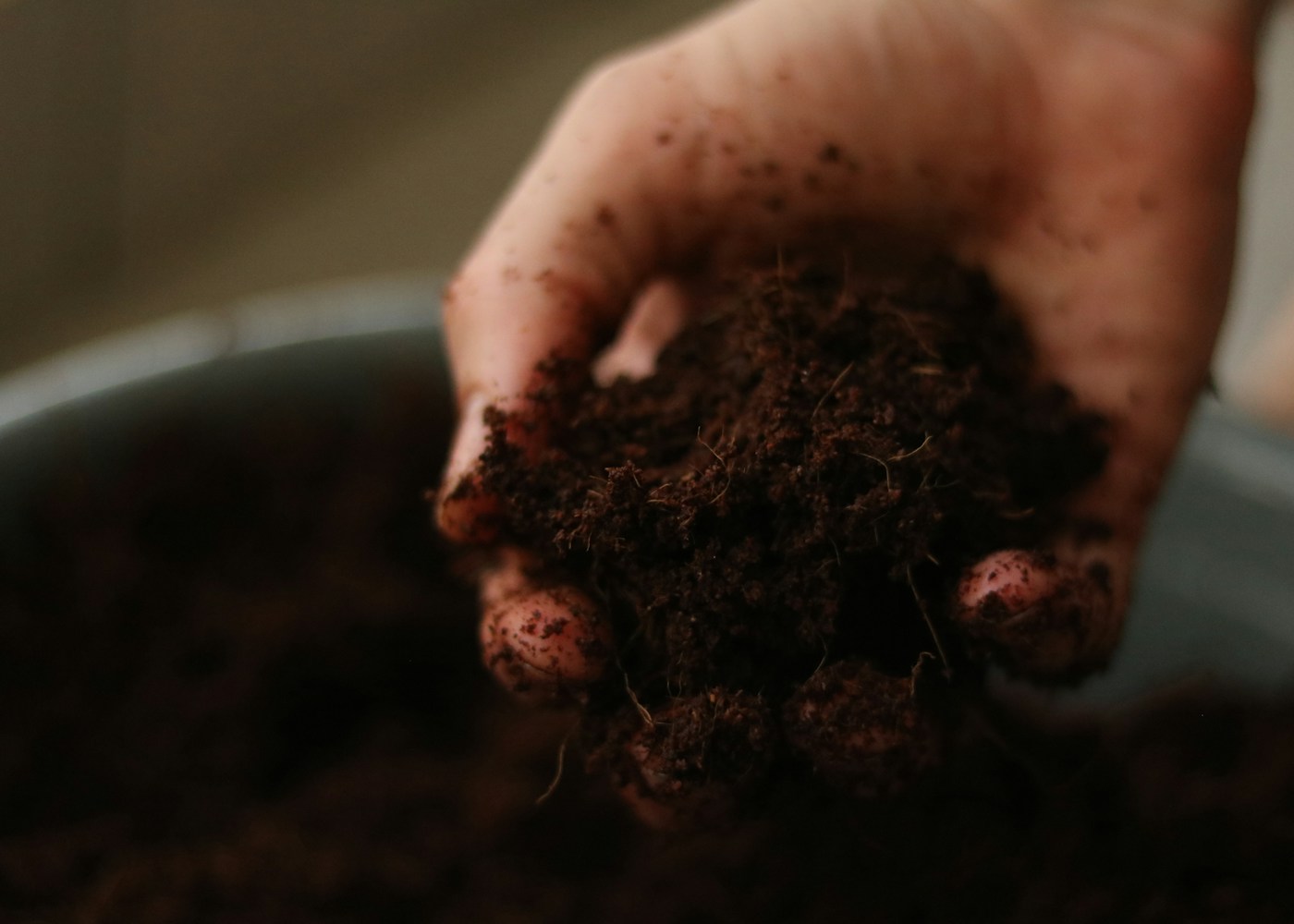
Ordinary houseplant compost, coarse orchid bark, tightly packed sphagnum moss, and a mineral-rich succulent mix retain and release water differently. Check the label and examine the material itself. A dry bark surface may tell you little about moss hidden near the center. Decorative stones can hide a damp mixture underneath. A fine old medium may remain wet long after a fresh open mixture would have dried. Your checking method needs to reach the roots' actual environment.
Newly purchased plants sometimes contain a compressed nursery plug that behaves differently from the surrounding mix. If the surface and pot weight seem contradictory, inspect more closely rather than compensating with frequent little drinks. You do not need to dismantle every healthy new root ball, but knowing that hidden differences exist helps explain irregular drying. Repotting may eventually be appropriate if the setup is unmanageable, particularly when damaged roots or deteriorated medium are already present.
Combine touch with the weight of the pot
For a typical houseplant mixture, feel below the surface near the edge without aggressively disturbing roots. The depth that should dry depends on the plant: a moisture-loving fern needs a different approach from a dryland succulent. Lift the pot when possible. After a thorough watering and complete drainage, notice its weight; compare that with its weight when it reaches the desired drying stage. That personal reference is often more useful than the appearance of the top layer.
Large containers may be too heavy to lift safely. In that case, check deeper moisture at accessible points and inspect the drainage setup. A wooden skewer can show damp particles below the surface, though it should be inserted carefully and cleaned between pots. Moisture probes also provide clues, but their readings vary with salts, medium, and sensor contact. Use several observations together. A tool that reads dry against a chunk of bark is not necessarily describing the entire root ball.
Learn the plant's acceptable drying range
A peace lily generally benefits from reliable moisture before repeated severe wilting, while a snake plant can use stored water and should dry much more fully between drinks. A moth orchid in bark needs moisture followed by renewed air around its roots. Species differ, and so do plants within a species when their root systems or containers differ. Identify the plant rather than assigning every green-leaved pot the same rule.
Leaf signals are useful but can mislead when separated from root conditions. Wilting may mean dry roots, damaged roots in wet mix, excessive heat, or a newly disturbed root system. A thick succulent leaf can remain firm while its pot is dry, because stored water is doing its job. Check the mixture before reacting to the foliage. The aim is to avoid both prolonged damaging drought and the habit of adding water whenever a plant looks imperfect.
Wet the root ball evenly
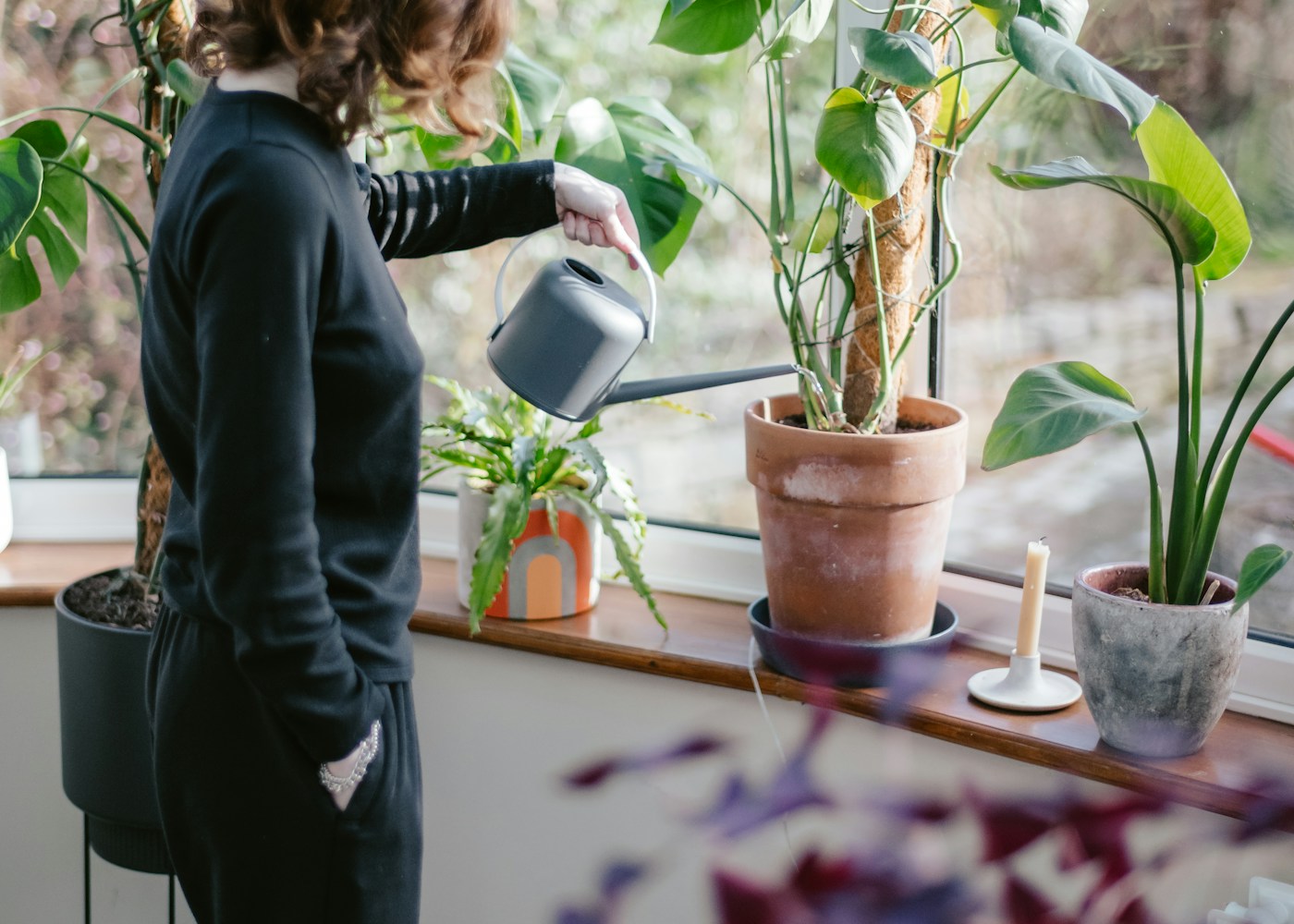
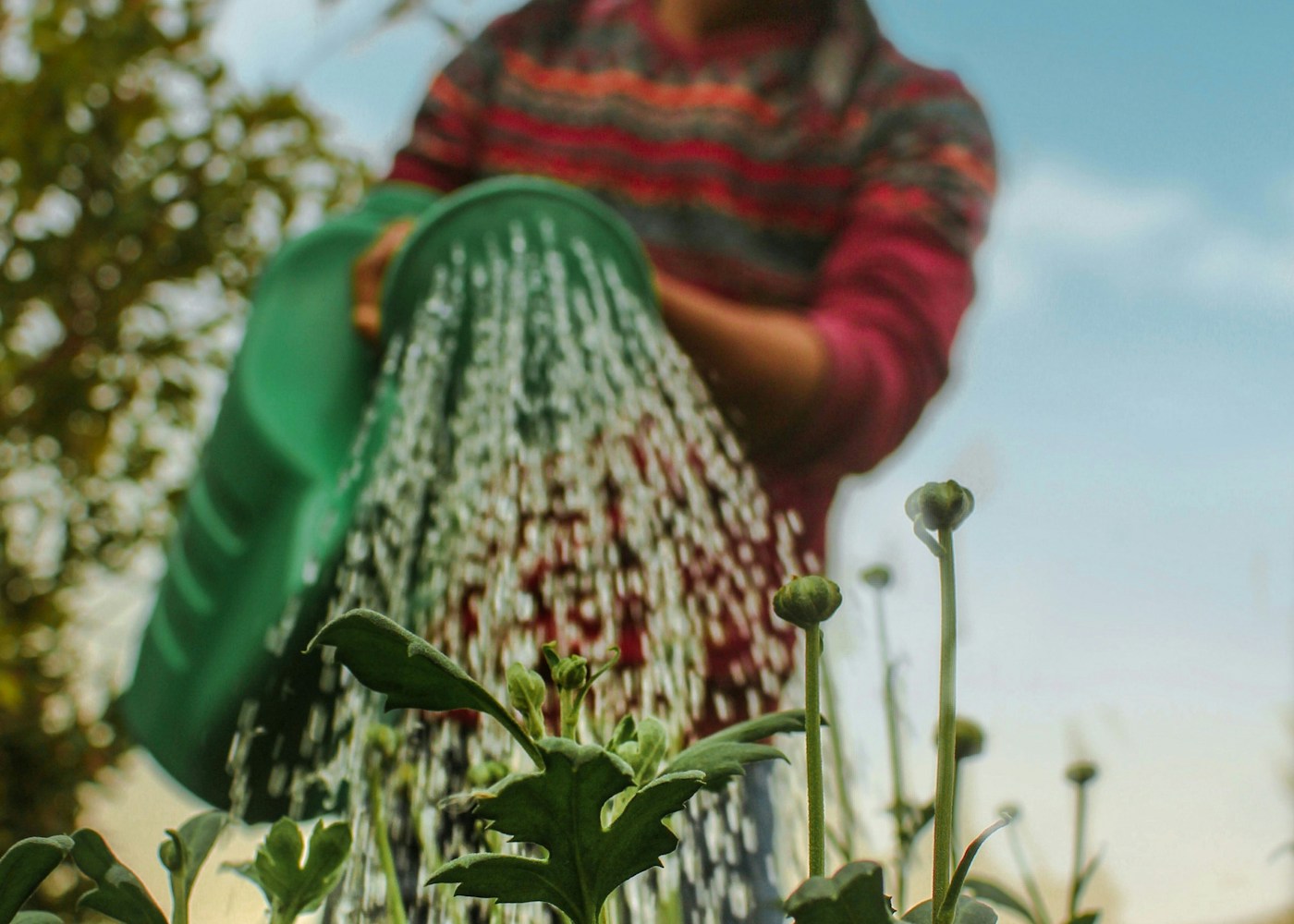
When a plant needs water, apply it slowly around the surface until the mix is appropriately moistened and excess begins to drain. A narrow-spouted can helps reach beneath dense foliage without filling crowns or leaf joints. Pause and repeat if the first water runs rapidly down one side. The visible appearance of runoff does not guarantee that every part of a dry root ball has absorbed moisture.
Hydrophobic mix may shrink from the pot and shed water along the gap. Rehydrate it with slow repeated applications or, where suitable for the plant and medium, a short bottom soak followed by complete drainage. Do not leave the container permanently submerged because one dry episode was difficult to correct. If the mixture repeatedly refuses to wet or has collapsed into a dense mass, plan a suitable replacement rather than continually working around the same structural problem.
Drainage includes the space outside the pot
Drainage holes help only when water can leave them and does not remain around the base. Check saucers and decorative covers after watering. A nursery pot can sit in a hidden pool even though it has several holes. Lift it out, empty the collected water, and return it after runoff finishes. Protect furniture with an appropriate waterproof surface, but do not confuse protecting the table with protecting the roots.
For a heavy planter that cannot be carried to a sink, arrange a practical way to collect and remove excess water. Check the system before the plant becomes large. A pot on a saucer that cannot be reached is likely to receive either inadequate watering or prolonged standing water. Avoid using a gravel layer inside a sealed pot as a drainage substitute. It creates a concealed reservoir rather than an exit.
Decide when bottom watering helps
Bottom watering can hydrate a dense small root ball evenly and avoid splashing delicate foliage. Set the pot in clean water long enough for the mixture to take up moisture, then remove it and drain fully. The necessary time depends on the pot and medium, so inspect the result rather than following a fixed soak duration for every plant. A very coarse mixture may behave differently from a fine moisture-retentive one.
Do not share the same soaking water among plants with uncertain pest or disease status. Occasional watering from above with freely escaping runoff can also help flush soluble salts that may accumulate with repeated bottom watering and feeding. Neither method is inherently superior for every situation. Choose the one that wets the intended root zone reliably and lets you manage the runoff, while avoiding water trapped in sensitive crowns.
Adjust after moves, pruning, and repotting
Moving a plant into brighter or warmer conditions can increase its water use. Moving it into shade or a cooler room can decrease it. Pruning removes leaf area, which may reduce demand, while a newly larger pot adds a volume of mix that roots have not yet occupied. These changes can invalidate a previously reliable interval. Keep checking the actual root zone instead of assuming the plant still needs the same quantity on the same day.
Repotted plants require particular attention because old and new mixtures may dry at different rates. The original root ball can remain dry while fresh outer mix stays moist, or the reverse can occur. Water deliberately and check both areas when accessible. Do not automatically saturate the whole pot repeatedly because roots were disturbed. If drainage and root health are sound, aim for the species' appropriate moisture range while the plant establishes itself in the new mixture.
Keep water quality and fertilizer in perspective
Most common houseplants can be watered successfully with suitable tap water, but mineral content and plant sensitivity vary. Persistent leaf-tip damage or heavy crusts may justify reviewing the water source and fertilizer concentration. Letting water stand overnight does not remove dissolved salts. Rainwater or low-mineral water can be useful where safe and appropriate, but changing water quality will not repair roots kept permanently wet.
Use room-temperature water rather than extreme hot or cold water. Fertilize according to the product's directions and the plant's growth, remembering that fertilizer adds soluble materials to the root zone. It is not an emergency treatment for wilting. Where appropriate, water with plain water periodically and allow runoff to escape. If the mixture is badly deteriorated or heavily crusted, suitable repotting may be more effective than adding products intended to correct every symptom individually.
Build a small record that answers a real question
For two or three uncertain plants, record the date, whether the pot was watered or only checked, and the condition that led to the decision. Add a note after a move or unusual hot spell. You do not need a complex spreadsheet. A short record can reveal that a cool-room pot stays wet for much longer than expected or that a root-filled fern repeatedly becomes dry within a few days.
Consider a routine in which you inspect all plants on the weekend and recheck the faster-drying ones midweek. Water only those at their appropriate stage, then empty every saucer. Group pots physically for access if useful, but do not assume neighboring plants require the same treatment. Over time the work becomes quicker because you recognize pot weight, root density, and seasonal changes. The successful routine is the one that keeps each root system within a suitable moisture range while remaining simple enough to follow consistently.
When someone else waters during an absence, leave instructions tied to observable conditions. Mark which pots should be checked, which should remain dry until you return, and where drained water must be emptied. Demonstrate lifting one familiar pot if that is your usual method. Avoid a vague request to give everything a little water, which encourages repeated surface wetting and unnecessary drinks for slow-drying plants. Group the instructions with the correct containers and test any automatic system before departure. Clear practical directions protect both the plants and the person helping you.
Further reading
Horticultural references for continued learning: