Start with the plant and the place
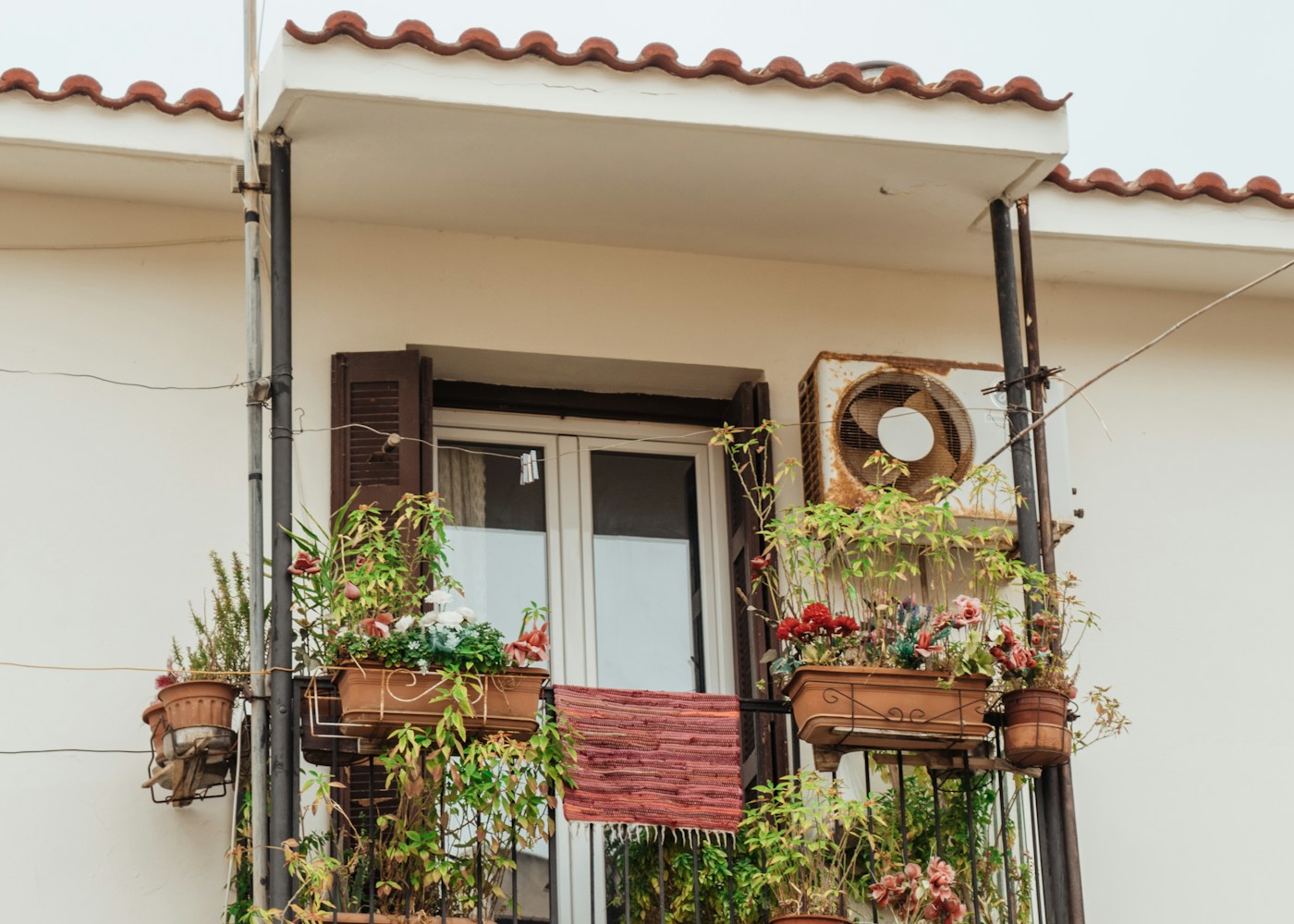
A narrow balcony has to function as a small outdoor room before it functions as a garden. Doors need to open, people need to pass, and every watered pot adds weight. The strongest design begins with those constraints and then uses plants to make the available space feel generous. A few well-chosen containers are often more rewarding than a railing crowded with thirsty miniature pots.
Check permission and loading first
Building rules, lease conditions, and structural limits can restrict what a balcony can safely carry. Wet growing medium weighs substantially more than an empty planter.
Ask about both the total load and how that load may be distributed. A cluster of large saturated pots is different from a few light containers spread across an approved area. Do not infer capacity from the apparent thickness of the balcony or from what a neighbor has installed. Rules may also cover railing attachments, screens, and permanent irrigation. Keep the answer or written guidance with your plan. If the property requires professional assessment, resolve it before ordering containers. The garden can be designed around confirmed limits; guessing creates a problem that plant care cannot solve later.
Confirm the relevant limits with the building owner or a qualified professional rather than estimating.
Map sun and reflected heat
Walls and glass can create hot pockets, while an overhang can cast deep shade. Conditions can differ across a very short balcony.
Spend time on the balcony in the morning, around midday, and later in the day. Note whether an adjacent wall reflects heat onto a particular corner and whether the upper overhang blocks rainfall. Wind may be stronger at railing height than near the floor. A sheltered position can still become hot, while a bright-looking corner receives little direct sun. Write down the differences rather than assigning one description to the entire space. Those observations help decide which plants belong in each position and whether a proposed edible crop has realistic light for a useful harvest.
Observe the site at several times and note the hottest and windiest positions.
Keep the exit route clear
Plants should not obstruct doors, drains, emergency access, or required escape routes. A pot that fits with the door shut may block it when open.
Open the door fully and carry a watering can along the intended route. Include the space needed to bend down and inspect a pot. A garden that works only when every container is pushed aside is unlikely to remain tidy or safe. Keep drains visible so leaves and debris can be removed. If the balcony has a required escape function, the relevant rules take priority over the planting plan. Arrange a few empty pots first and live with their positions briefly before filling them. It is easier to correct a cramped layout before everything becomes heavy.
Mark a clear walking strip before arranging containers.
Choose stable containers
Tall light pots can tip in wind. Railing fixtures require appropriate secure fittings and permission; improvised hanging arrangements are risky.
Choose stable shapes and consider the mature plant above the pot. A tall leafy plant can catch wind even when its container seems heavy enough at first. Railing planters must have fittings intended for the situation and be permitted by the building. Never improvise a loose attachment above people below. Check the watered load, not just the weight of an empty plastic shell. Position containers so they cannot be knocked by the door or a chair. Wind exposure changes as plants grow, so review stability again once the foliage has filled out.
Keep heavy containers safely positioned and avoid placing loose objects above people below.
Use a container-growing medium
Garden soil can compact and add unnecessary weight in pots. Suitable potting mix supports drainage and root growth.
Fill containers with a medium suited to the plants and the permitted weight. Heavy garden soil can compact and add avoidable load, but a very light mix still needs appropriate water retention. Read the product information and account for the fully watered condition. Use containers with effective drainage outlets. A layer of stones does not solve a sealed pot and adds weight that may be particularly unhelpful here. Leave a watering space below the rim so water can soak in without immediately spilling over the edge onto the balcony floor.
Choose the medium for the intended plants and account for its watered weight.
Plan where drainage will go
Runoff should not damage the building, annoy neighbors, or leave slippery surfaces. A sealed saucer also needs emptying so roots do not stand in water.
Water a trial container and watch the complete route of the runoff. Does it collect under the pot, reach a building joint, or drip beyond the railing? Suitable trays can protect surfaces, but they need emptying so plants do not stand in stagnant water. Follow building rules about drainage and shared spaces. A small watering can with a controlled spout may be easier to manage than a hose on a narrow balcony. If using irrigation, test it while you are home and include a safe plan for overflow or a failed connection.
Test the drainage arrangement before filling the balcony with plants.
Choose plants for the exposure
A sunny windy balcony favors different choices from a sheltered shaded one. Compact varieties can reduce support and access problems.
Begin with plants whose mature size and needs fit the measured conditions. Compact crops can reduce the need for large supports, though compact does not mean they require no root space. Sun-loving fruiting vegetables need sufficient light, while some leafy crops may be more realistic in a less sunny position. Check local climate and plant restrictions as well. Choose a small number that you will actually enjoy tending or harvesting. A successful first season with three manageable containers provides more useful experience than a crowded display of incompatible plants requiring constant rescue.
Start with a small group suited to the measured conditions.
Protect plants from wind sensibly
Wind increases water loss and can tear foliage. A screen changes wind behavior and may itself need secure structural approval.
Wind can dry mix quickly and damage tender leaves, but blocking it completely is not always simple. Solid screens can catch significant force and may be restricted by the building. Use only permitted secure arrangements and consider plants suited to exposure. Keep lightweight objects from becoming loose hazards. Water demand may rise sharply during a windy spell even when temperatures are moderate, so inspect the pots rather than relying on rainfall totals. An overhang may prevent rain from reaching the root zone at all. Check the actual mix after weather that appears to have watered everything.
Use permitted secure shelter and avoid creating a large unstable sail.
Remember the limits of a pot
Roots cannot explore a wider bed for nutrients. Suitable feeding may be needed, but the plant and mix determine the routine.
A productive container may need feeding because roots have limited access to nutrients beyond the pot. Use a product suitable for the crop and follow the instructions, especially for edible plants. More feed does not fix insufficient light or a container that dries severely every afternoon. Keep runoff from accumulating on surfaces or dripping to neighbors. If the mix already contains fertilizer, account for it before adding more. Harvest and remove declining material regularly so the small space remains inspectable. Good access makes those ordinary tasks easier and reduces the temptation to overlook a hidden pot.
Follow the product label and do not let fertilizer runoff collect on neighboring surfaces.
Expand after the first successful season
A small trial shows how much watering and maintenance the space really requires. It also reveals which positions are genuinely productive.
At the end of a growing period, note which plants used the most water, which positions were productive, and which arrangements obstructed the space. Keep the notes practical: one container may have performed well but required more attention than you can give next year. Reuse sound equipment and remove insecure or awkward pieces. If you expand, do so within the confirmed loading and access limits. The aim is a balcony that remains pleasant to use as well as pleasant to photograph, with planting that fits everyday life rather than taking over every available surface.
Keep the best-performing plants and add containers only where access and care remain straightforward.
Can I grow vegetables on a shaded balcony?
Some leafy crops may cope with less direct sun than fruiting crops, but deep shade limits productivity. The choice depends on the actual light and local climate rather than the word balcony. Begin with a modest trial and realistic harvest expectations. A tomato plant in poor light is unlikely to become productive simply because it receives more fertilizer. Keep the first planting small enough that you can observe performance before investing in many containers.
Are railing planters a good use of space?
They can be useful only when the building permits them and the fixing is suitable for the full watered weight and local wind exposure. Do not hang an improvised container above people or property below. Check whether watering causes runoff beyond the balcony. A safely positioned freestanding container may be easier to manage. Space efficiency is worthwhile when the arrangement remains secure, accessible, and compatible with the building’s rules and drainage requirements.
The first three-container trial
A useful first planting might place one locally suitable sun-loving crop in the brightest approved position and two compatible smaller plants in accessible pots nearby. The exact species should follow your climate and light assessment. Through the first season, note watering demand, wind damage, and whether you can still use the balcony comfortably. If those three containers already require more daily attention than you can give, adding six more will not improve the experience. Refine the existing arrangement first. The trial creates practical evidence about the site while keeping expense, weight, and maintenance manageable.
Further reading
Horticultural references for continued learning: