Give a climbing plant a believable amount of space
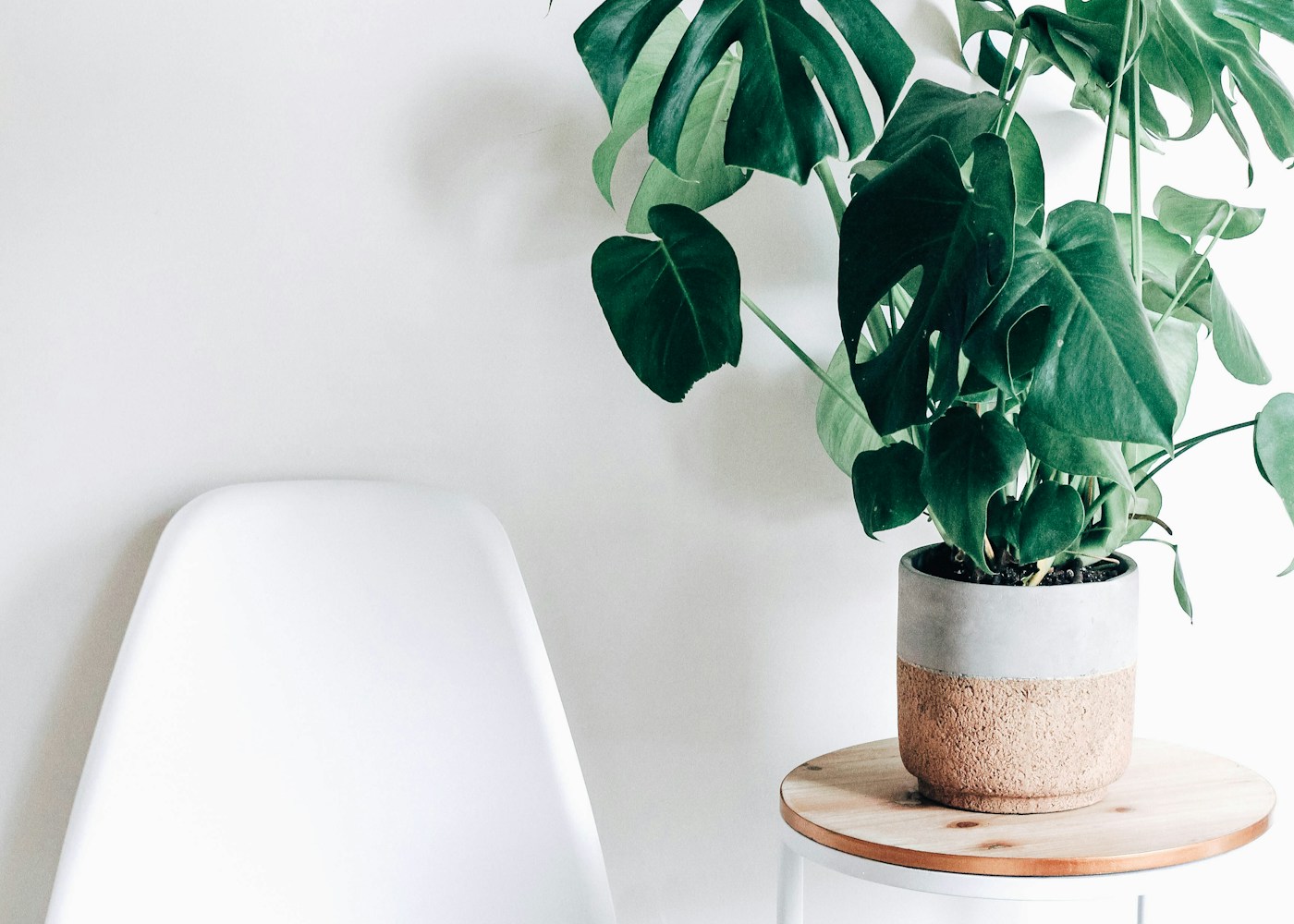
A young Monstera deliciosa can pass for a table plant. Its broad leaves rise from a tidy nursery pot, and the growing stem is barely visible. That impression changes as the stem lengthens and the aerial roots begin reaching out. A mature monstera is a climbing plant with a definite front and back, rather than a round shrub that will remain neatly centered by itself. The most useful decision comes before repotting: decide where its next several leaves could reasonably fit.
Choose a position with clearance above the current foliage and enough width for a leaf to open without being folded against furniture. Leave a route to carry the pot to a sink or set it on a waterproof tray. A plant that is difficult to water often receives hurried little drinks, while a plant wedged into a walkway gets its petioles knocked whenever someone passes. Allowing for these ordinary tasks makes the eventual large specimen much easier to live with.
Put the window first
Bright, filtered daylight supports stronger stems and larger new leaves. Beside a bright window is usually more promising than across the room, even when the distant corner looks equally pleasant to human eyes. Look at where sunlight actually lands through the day. Thin curtains can soften an intense beam, while an outdoor roof or a nearby building can turn an apparently sunny aspect into a shaded one. Window direction is a starting clue, not a complete description of the conditions.
Introduce stronger exposure gradually if the plant came from a shaded shop. Pale, dry patches on the window-facing surface can indicate scorch, particularly after a sudden move. More light does not mean pressing foliage against hot glass. In cold weather, keep leaves away from the pane and protect the pot from drafts through an opening window. A moderate, steady indoor temperature is a better setting than a bright position that becomes cold every night.
Understand the stem before adding a pole
Follow the main stem with your eyes. Leaves emerge at nodes, and aerial roots usually appear toward the climbing side. Place a support behind that stem, where the roots can approach it, rather than fastening every leaf stalk around a central stick. Petioles need freedom to angle the leaves toward light. Tying them tightly can restrict movement and damage the joints. Use soft ties around substantial stem sections, leaving enough room that the material does not bite into expanding growth.
A firm wooden stake can hold a modest plant upright. A textured pole provides more attachment opportunities, while a moist moss pole creates a separate watering task. Choose a support you can actually maintain. It should be stable at the base and tall enough to accommodate the next stretch of growth. Install it during repotting when you can see the roots, rather than pushing a large pointed object blindly through a densely occupied pot.
Water the root ball, then let air return
Check moisture below the surface before watering. The upper layer may feel dry while the center remains damp, especially in a large decorative container. Lift the nursery pot when possible and learn its lighter weight as it approaches the next watering. For a rooted monstera in a free-draining mix, the aim is to let a substantial part of the mixture dry between thorough waterings without leaving the entire root ball dry for a prolonged period.
When water is needed, wet the mix evenly until surplus drains out. Empty the saucer or cachepot afterward. A thin trickle down one side can leave the opposite side dry, while repeated small additions keep the surface wet without properly hydrating the deeper roots. If water immediately escapes around a shrunken, dry root ball, apply it slowly in several passes and allow time for absorption. Do not solve the problem by leaving the pot permanently submerged.
Repot for roots, not for a larger silhouette
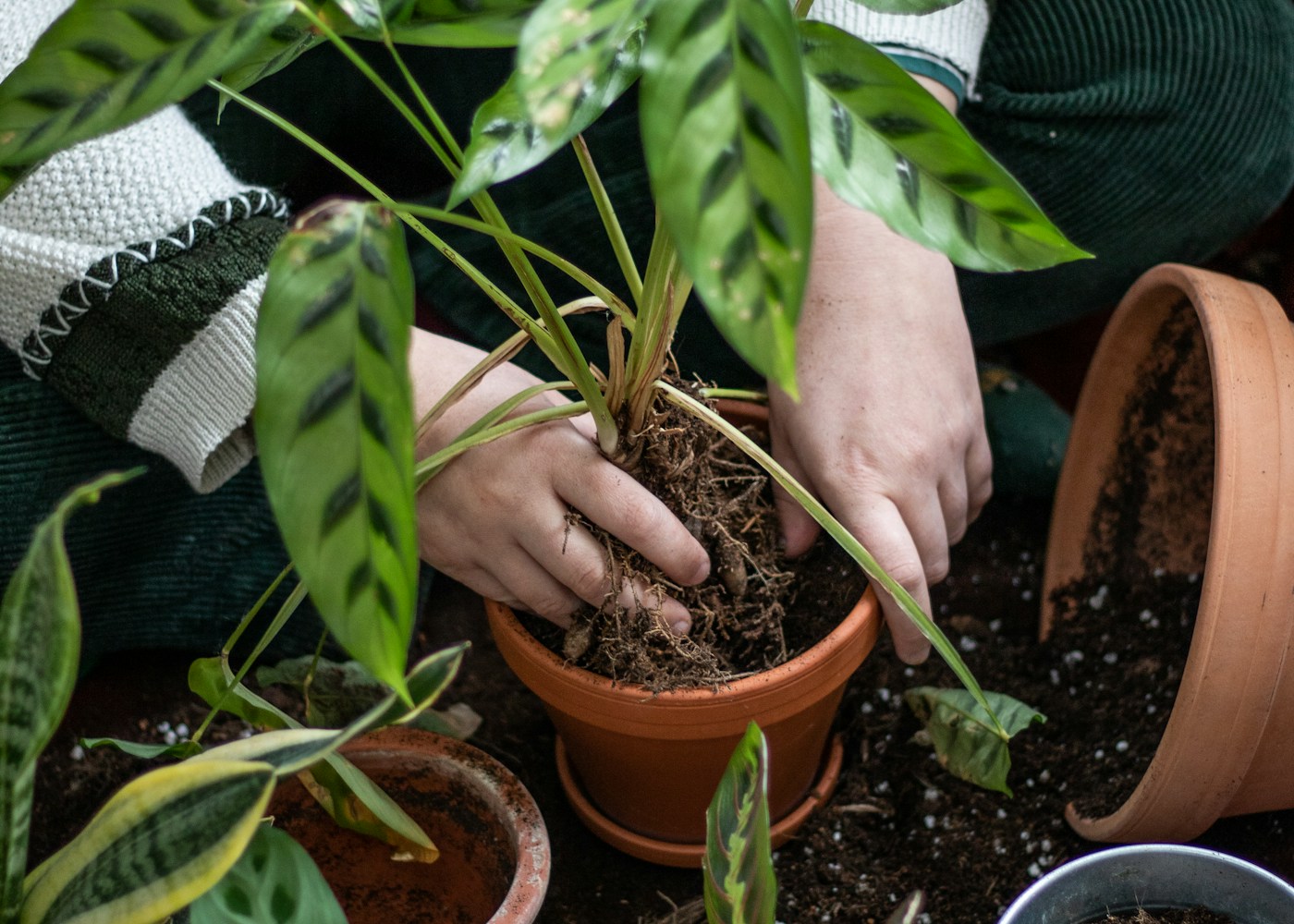
A bigger outer pot can make a plant look established, but a large volume of unused wet mix can make root care harder. Slide the plant out when the mixture is slightly moist and inspect the root system. A firm network wrapping the outside, roots repeatedly escaping through drainage holes, or a pot that dries exceptionally quickly can justify moving up a modest size. A few visible roots do not automatically mean an urgent upgrade.
Use a houseplant mixture that retains some moisture while containing coarse material that preserves air spaces. Commercial aroid mixes vary; inspect the texture rather than trusting the label alone. Avoid garden soil, which may compact in an indoor pot. Replant at roughly the previous depth and leave watering space below the rim. You can loosen a tight outer root layer gently, but there is no benefit in dismantling a healthy root ball merely to remove every trace of old mix.
Treat aerial roots as part of the architecture
Long aerial roots are normal, and their appearance does not prove that the underground roots have failed. Guide flexible roots toward the pot or support while they are young if that suits the display. Avoid sharply bending older, brittle roots. Some can grow into the potting mixture and contribute to anchorage. Others may remain exposed without requiring intervention. Be careful around porous plaster, fabric, or unfinished timber, since attached roots and moisture can mark adjacent surfaces.
There is usually no need to place each aerial root in a separate glass of water. Doing so creates an awkward arrangement that is difficult to move and does not replace a well-managed root ball. If a root must be shortened because it obstructs access, use clean cutting tools and make a deliberate cut. Consider the shape of the whole plant first; trimming roots alone will not make a long, unsupported stem grow upright.
Prune where a new shape can begin
Pruning can reduce an oversized plant, but it cannot shrink existing leaves. Locate a node below the section you intend to remove, and plan how the remaining stem will sit against its support. Cut with clean, sharp tools while wearing gloves if sap irritates your skin. New growth may emerge from a dormant bud below the cut, although its exact direction and timing are not guaranteed. A bare old section will not instantly become a symmetrical cluster of foliage.
A removed stem section needs a viable node to become a new plant. A leaf with its petiole but no node cannot grow a replacement climbing stem. If propagating, choose a manageable piece with healthy tissue and a node, reduce awkward leverage, and keep the rooting setup stable. Moisture and air both matter. Clear water makes root development easy to see, but moving rooted cuttings into potting mix still requires careful attention to moisture during establishment.
Read the next leaf more carefully than the oldest one
Small, unsplit leaves can be normal on a juvenile plant. Leaf holes and splits tend to develop as the plant matures under suitable conditions. Buying fertilizer to force immediate fenestrations is unlikely to correct a dark location. Compare several successive leaves. If new leaves become progressively smaller while the stem stretches toward the window, assess light and root health. One oddly shaped leaf can result from physical damage or trouble during unfurling rather than a lasting nutritional deficiency.
Yellow leaves also require context. An isolated oldest leaf can age naturally. Several yellowing leaves combined with persistently wet mix suggest a root-zone problem. Brown edges may reflect prolonged dryness, salt accumulation, low humidity, or damaged roots. Do not pull open a tightly furled new leaf; the tissue tears easily. Check for pests around unfolding foliage and leaf joints, and improve the conditions that support its opening instead of trying to complete the process by hand.
A workable plan for a crowded living room
Suppose a monstera leans from a low shelf toward the only bright window. Its stem is nearly horizontal, and the leaves occupy the passage beside a sofa. First move the pot to a stable stand nearer that window, leaving space behind it for a support. At the next suitable repotting, arrange the stem against a firm pole and secure the stem rather than the petioles. Remove only the growth that cannot fit the new arrangement.
Keep the original watering checks while you learn how the brighter position changes drying. The plant may use water faster in active growth, but a fresh potting mixture may also hold moisture differently. Judge the result through upright supported growth and the quality of new leaves over the following months. Keep monstera tissue away from children and pets who might chew it, and use the plant as a living architectural feature with predictable access, rather than as furniture that must remain permanently still.
Keep broad leaves clean without polishing them
Dust on a large monstera leaf is easy to remove with a soft damp cloth. Support the underside with your hand and wipe gently along the surface, rinsing the cloth between leaves. Avoid oily homemade polishes, which can leave residues and attract more dust. Turn the leaf over during cleaning to check the veins for scale insects or fine webbing. Finish by inspecting the ties and the rim of the pot, since routine handling often reveals a support that has loosened or a root escaping underneath.
For a plant grown from several cuttings in one nursery pot, inspect each stem before installing a support. They may face different directions, making a single narrow pole awkward. You can guide them toward a broad support while they are flexible, or separate suitable rooted sections at a planned repotting. Do not twist rigid stems forcefully into a symmetrical arrangement. A smaller number of well-positioned stems often creates a clearer outline than a crowded clump tied tightly together. Choose the structure that leaves both the soil surface and the newest growing points accessible.
Further reading
Horticultural references for continued learning: